WNBA and Players Union Reach Historic New CBA Agreement

new wnba cba

After over 100 hours of marathon negotiations, the WNBA and the players’ union (WNBPA) have reached a verbal agreement on a transformational new WNBA CBA. Fueled by booming league viewership, the announcement confirms the 2026 season will start on time and deliver the largest pay increase in league history.

The Financial Leap

For the first time, the league has established a formal revenue-sharing model which alters the entire financial foundation of the WNBA. Player compensation is now tied directly to a nearly 20% average revenue share. To understand the magnitude of this new WNBA CBA, here is how the financial structure compares to last season:

Salary Cap: Jumps to $7 million per team (up from $1.5 million in 2025).

Average Salary: Jumps to around $600,000 (a massive increase from last season’s average of $107,000).

Maximum Salaries: The new supermax starts at $1.4 million (dwarfing the 2025 supermax of $249,244).

Minimum & Rookie Base: The new minimum salary surpasses $300,000. For context, the 2025 rookie minimum was $66,079, with top-tier rookies earning between $76,000 and $78,000.

Ratification & The Sprint to Open the 2026 Season

The term sheet will now go to the players and the WNBA Board of Governors for a vote to ratify the new agreement, a process expected to take several weeks.

Because extended negotiations successfully avoided a delay, the core 2026 of the WNBA calendar remains intact. However, the league is now staring down a jam-packed offseason in order to open the 2026 season on time. The WNBA must quickly execute a two-team expansion draft for Toronto and Portland and navigate a massive free agency period for more than 100 players before training camps open in mid-April.

Notably, this compressed timeline means free agency and the draft will overlap, creating a whirlwind for front offices. Here is how the upcoming month is expected to play out:

March 31: CBA Formally Signed

April 1-6: Expansion Draft (Toronto & Portland)

April 7-18: Free Agency Period

April 13: WNBA Draft

April 19: Training Camp Opens

April 25: Preseason Games Begin

May 8: Regular Season Tips Off

Transformative Benefits

League leaders, including WNBA Commissioner Cathy Engelbert and WNBPA President Nneka Ogwumike, called the deal transformative.

Ogwumike highlighted how the new agreement fundamentally shifts the player experience:

For the first time, player salaries are tied to a truly meaningful share of league revenue, driving exponential growth in the salary cap, increasing average compensation beyond half a million dollars, and raising the professional standard across facilities, staffing, and support. It strengthens housing and retirement, and expands resources for family planning and parental leave. It redefines what it means to be a professional in this league.

⭐ WNBA Expansion: Essential Fan Resources

This post may contain affiliate links. Please read the disclosure policy.

The league is growing! Here’s how you can rep the newest WNBA teams from day one.

Shop Tees >
See Her Live >
Get Ready for the Sirens >

Watch from Home

Watch the WNBA Live on Prime Video

Support W Bound

Love our coverage? The best way to help keep the site running is by checking out our official partners. From team gear and game-day tickets to your everyday Amazon purchases, using our links directly supports our platform.

The Sale, Relocation, and Rebirth of a WNBA Dynasty

houston comets logo

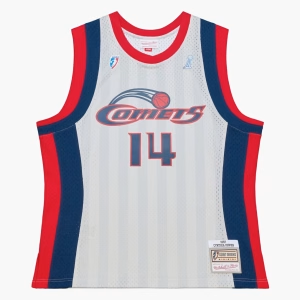
On September 24, 2026, the Connecticut Sun played their final game at Mohegan Sun Arena, closing out their era in New England with a 95-81 victory over the Toronto Tempo. After more than two decades of sustained success in the WNBA’s smallest market, the franchise is officially moving to Texas. In a landmark transaction for women’s professional sports, the WNBA and the NBA Board of Governors unanimously approved the sale of the Sun to Houston Rockets owner Tilman J. Fertitta on May 13, 2026. Beginning with the 2027 season, the franchise will officially revive one of the league’s original eight founding teams: the Houston Comets.

The $300 Million Deal and League Intervention

The Mohegan Tribe’s decision to sell was rooted in the evolving economics of the WNBA. Operating in a non-major metropolitan market made it increasingly difficult to attract top-tier free agents, despite the team’s strong local support. Notably, the Sun were a highly successful business venture; the team operated profitably without subsidies for years, becoming the first WNBA franchise to turn a profit despite playing in the league’s smallest market.

The path to the Houston sale was complex and involved direct intervention from the league office. In August 2025, a Boston-based investment group led by Boston Celtics minority owner Steve Pagliuca reached an agreement to buy the Sun for a record $325 million. This proposed sale would have kept the franchise in New England by relocating it to Boston. However, the WNBA blocked the transaction. The league asserted that relocation decisions are ultimately made by the WNBA Board of Governors, not by individual teams, and prioritized Houston as the next market for a franchise over Boston.

Ultimately, the Tribe accepted Fertitta Entertainment’s $300 million offer. The Board strongly favored Fertitta’s bid, driven by the market appeal of resurrecting the historic Comets brand in a modern NBA arena. To say a regional goodbye before the 2027 relocation, the Sun hosted two regular-season games at PeoplesBank Arena in Hartford and returned to TD Garden in Boston for a highly publicized matchup in August 2026.

From the Miracle to the Sun

To understand the weight of the move, one must look at the franchise’s origins. The team began in Florida as the Orlando Miracle in 1999, operating as a sister team to the NBA’s Orlando Magic. After the 2002 season, the NBA restructured the WNBA, forcing operators to buy their teams outright. When Magic ownership declined, the Mohegan Tribe purchased the franchise in 2003.

This transaction made the Mohegan Tribe the first Native American tribe to own a major professional sports team. They relocated the squad to Uncasville, rebranded them as the Sun, and built a consistent playoff contender. The Sun qualified for the postseason in 15 of their 21 years in Connecticut.

The franchise was defined by cornerstone players across different eras. Early on, the team was built around foundational stars like Nykesha Sales, Katie Douglas, and Asjha Jones. In the modern era, the Sun’s identity was anchored by Alyssa Thomas, who spent more than a decade as the heart and soul of the roster, establishing herself as the WNBA’s all-time triple-double leader. Alongside her was Jonquel Jones, who won the 2021 WNBA MVP award while wearing a Connecticut uniform. Despite a consistent track record of regular-season success and multiple Finals appearances, the Sun ultimately depart New England without having secured a WNBA championship.

Fan Hub

This post may contain affiliate links. Please read the disclosure policy.

Rock the Jersery >
Shop Memorabilia >
Relive the Dynasty >

The Return of the Houston Comets

In 2027, the franchise inherits a brand defined exclusively by championships. Debuting in the WNBA’s inaugural 1997 season, the original Houston Comets were the league’s first dynasty. Coached by Van Chancellor and powered by a legendary core—including four-time Finals MVP Cynthia Cooper, three-time regular-season MVP Sheryl Swoopes, and all-time great Tina Thompson—the Comets won the league’s first four championships from 1997 to 2000.

Their 1998 season remains a gold standard in professional basketball: a 27-3 record with a .900 winning percentage. After original owner Leslie Alexander sold the team in 2007, the franchise faced steep financial struggles. The league took over operations in 2008 and disbanded the club later that year. Now, the Comets brand returns, bringing back the retired jerseys and four championship banners that have been waiting in the rafters of the Toyota Center for nearly two decades.

Facilities and Front Office Continuity

The 2027 Comets will play their home games at the Toyota Center in downtown Houston, an arena with a seating capacity of just over 18,100 for basketball. To accommodate the WNBA’s return and ensure top-tier amenities, the Fertitta family is executing a $180 million renovation project dubbed “Toyota Center Reimagined”. Slated for completion by the fall of 2027, the arena upgrades include a new 20,000-square-foot glass atrium entrance, premium hospitality spaces like the new Summit Club, and a significantly expanded joint Rockets and Comets team store. Furthermore, rather than building an off-site compound, the Comets’ new dedicated locker rooms, practice courts, and elite medical facilities are being integrated directly into the arena’s footprint.

Despite the ownership and geographic changes, the Connecticut Sun’s front office brain trust is moving to Texas. General Manager Morgan Tuck and Team President Jen Rizzotti have both been retained to lead the Houston Comets into their inaugural relaunch season.

For Rizzotti, the move brings her basketball career full circle. Long before she was an executive, Rizzotti was a point guard who won two WNBA championships with the Houston Comets in 1999 and 2000. Now, she returns to the city where she won titles as a player, tasked with building a championship-caliber roster as the WNBA expands into its next era.

The Trademark Dispute and 2027 Branding Rollout

While the Houston Comets are heavily leaning into nostalgia—using the classic retro logo and the tagline “The Dynasty Returns” on their newly launched holding website—the full modernized visual identity remains under wraps. A full official brand unveiling—which will likely feature an updated logo, modernized color palette, and the new 2027 uniform reveals—is expected to happen later in the offseason as they build hype for their 2027 debut.

The delay in an immediate merchandise rollout is tied to an unexpected legal hurdle. The WNBA inadvertently allowed the original “Houston Comets” trademark to lapse in 2021. In 2024, a Delaware LLC linked to Houston native and rapper Travis Scott filed for the trademark, creating a federal trademark dispute. The league is currently asserting common law rights against what it deems a “trademark squatter,” but the issue must be resolved before the franchise can fully monetize the Comets name.

Helpful Links

The Cleveland Sirens: How the WNBA's Newest Expansion Team is Building for 2028

cleveland sirens 2028

The WNBA Returns to Cleveland: An Introduction to the Sirens

The WNBA is officially returning to Northeast Ohio. The league recently announced the Cleveland Sirens as its newest expansion franchise, joining the recent additions of Golden State, Toronto, and Portland. Slated to begin play in the 2028 season, the Sirens restore a WNBA presence in Cleveland for the first time since 2003. Here is a breakdown of the new franchise, its historical roots, and the timeline for its debut.

The Ghost of the Rockers

Before the Sirens, there were the Cleveland Rockers. As one of the WNBA’s original eight franchises in 1997, the Rockers built a solid foundation during the league’s formative years. The team reached the playoffs four times in seven seasons, peaking with an Eastern Conference Finals appearance in 1998, and featured franchise cornerstones like Suzie McConnell-Serio, Merlakia Jones, and Penny Taylor.

The franchise folded in 2003, but the decision was not tied to a lack of fan interest—the team averaged over 8,500 fans in their final season. Instead, then-owner Gordon Gund opted to cease operations of the WNBA club, and the league could not secure a local buyer willing to take on the financial commitments. The roster was dispersed across the league, and Cleveland was left without a team. Two decades later, the financial viability and infrastructure of women’s sports have shifted, allowing for a return to the city.

The Sirens Identity

While Portland recently revived the Fire and Houston brought back the Comets, Cleveland ownership opted against a nostalgic reboot of the Rockers. The decision to leave the Rockers name in the past was deliberate; leadership wanted to forge a completely new identity for a modern era of women’s sports, unburdened by the history of a folded franchise and geared toward a new generation of fans.

Instead, they introduced the Cleveland Sirens. The name operates on multiple levels to connect deeply with the city. Geographically, it draws from Cleveland’s position on the shores of Lake Erie and the region’s rich maritime history, invoking the powerful, captivating mythological figures of the water. Figuratively, a siren represents an alarm—a loud, unmistakable warning that Cleveland has arrived.

The team’s branding leans heavily into this nautical theme. The color palette features Lake Erie Navy, Seafoam Green, and a striking Coral accent, establishing a fresh look that stands entirely apart from the city’s previous WNBA chapter.

Ownership Structure

The franchise is backed by Rock Entertainment Group, led by Dan Gilbert, in partnership with a localized group of female business leaders. This structure mirrors the approach of several successful WNBA franchises, pairing the existing infrastructure of an NBA ownership group with dedicated, specialized investors.

Because Rock Entertainment Group already owns the Cleveland Cavaliers, the Sirens can immediately tap into established corporate partnerships, medical staff networks, and ticket sales departments rather than building an organization entirely from scratch.

Get Ready for the Sirens

This post may contain affiliate links. Please read the disclosure policy.

Rep the Sirens >
Rock the Hoodie >
Go Vintage >

Arena and Facilities

The Sirens will play their home games at Rocket Mortgage FieldHouse, sharing the downtown arena with the Cavaliers. The venue holds a basketball capacity of just over 19,400, placing the Sirens in one of the league’s largest arenas. Ownership is currently constructing a dedicated WNBA locker room within the arena to establish a permanent footprint for the team.

For day-to-day operations, the team will initially practice at the Cleveland Clinic Courts in Independence. However, following the blueprint of franchises like Seattle and Las Vegas, the ownership group has secured land to build a $40 million dedicated WNBA practice facility and headquarters. Expected to open in the franchise’s second season, the complex will feature two full courts, hydrotherapy pools, film rooms, and sports science labs built exclusively for the Sirens.

Timeline to Tip-Off

Targeting an inaugural season in 2028, the immediate focus for the franchise is building its foundational operations and local fanbase. Fans can already place deposits for season tickets to secure their spot in line for the inaugural campaign. At the same time, the team will continue rolling out its full Sirens branding and merchandise over the coming months while conducting a search for a General Manager and Head Coach, a process expected to conclude by the summer of 2027.

Once the leadership team is in place, attention will shift entirely to roster construction, beginning with the WNBA Expansion Draft in late 2027. Following the expansion draft, the Sirens will have their first opportunity to sign free agents in early 2028. From there, the team will participate in the 2028 WNBA Draft before opening inaugural training camp in the spring of 2028.

What Would New WNBA Salaries Look Like in 2026?

This post may contain affiliate links. Please read the disclosure policy.

new wnba salaries

What could a top WNBA player earn in 2026 and beyond? Six figures? A million dollars? Or a truly revolutionary multi-million dollar salary?

The answer is being decided right now in negotiations for the league’s new Collective Bargaining Agreement (CBA), which expires on October 31st. The final number depends entirely on which financial blueprint the league and its players can agree on.

To understand what new WNBA salaries could look like, we don’t have to guess. We just have to look at the proven, billion-dollar model used by their NBA counterparts and apply it to the WNBA’s new financial reality.

Stream Big 12, ACC & SEC games on ESPN, ESPN2, ACCN, SECN, ESPN+ & more. Includes Disney+ and Hulu. All for 29.99/mo.

The Blueprint for Million-Dollar Salaries: The NBA Model


The NBA’s salaries are not arbitrary; they are the direct result of a negotiated partnership that turns league revenue into player paychecks.


Here’s how the NBA’s revenue directly translates into its salary cap, using real, projected numbers for the 2025-26 season:


Step 1: Determine the Player’s Total Share. The NBA’s total revenue is over $11 billion, a large portion of which is counted as Basketball Related Income (BRI). The CBA mandates that players receive 50% of this BRI. For the 2025-26 season, this created a total salary pool for all players of approximately $4.638 billion.


Step 2: Divide the Pool by the Number of Teams. That $4.638 billion pot is then divided evenly among the 30 teams in the league.


The Math: $4.638 Billion / 30 teams = $154.6 Million.


This final number—$154.6 million—becomes the official team salary cap. That cap, in turn, dictates the maximum salary a single player can earn (which is set as a percentage of the cap) and all other player contracts.

⭐ WNBA Expansion: Essential Fan Resources

The league is growing! Here’s how you can rep the newest WNBA teams from day one.

See Her Live >
Book a trip >
Lace up >

Watch from Home

Watch the WNBA Live on Prime Video

Projecting the Future: Two Paths for WNBA Salaries


The WNBA’s current economic model results in players receiving a share of league revenue that is approximately 10%. Using the WNBA’s new, conservatively projected annual revenue of $400 million, we can see what salaries would look like when that revenue is split across the 15 teams set for the 2026 season.


Path A: The Current WNBA Model (~10% Share)


If the league maintains its current structure, the new revenue would create a total player salary pool of $40 million (10% of $400M).

  • The Math: $40,000,000 / 15 teams = $2,666,666
  • New Team Salary Cap: Approximately $2.67 million
  • What a Max Salary Would Look Like: In the $500,000 – $600,000 range.
  • What a Top Rookie Would Earn: Around $150,000.


Path B: The NBA Partnership Model (~40-50% Share)


If the WNBA adopts the NBA’s partnership blueprint, a 40% share of revenue would create a total player salary pool of $160 million.

  • The Math: $160,000,000 / 15 teams = $10,666,666
  • New Team Salary Cap: Approximately $10.67 million
  • What a Max Salary Would Look Like: $1.5 – $2+ million per year.
  • What a Top Rookie Would Earn: A starting salary in the $250,000 – $300,000+ range.

The Billion-Dollar Question: Why Wouldn’t the WNBA Adopt This Model?

Seeing the numbers, the natural question is: why would the league even consider Path A?

The holdup is historical. The 10% model is a relic from the WNBA’s “investment phase,” when owners subsidized the league and absorbed losses. Now that the league is a high-growth business, owners are positioned to see a major return on that long-term investment, and sharing 40-50% of the revenue would cut into that return significantly.

The players’ union, however, is arguing that the investment has matured. The players are the partners driving today’s record-breaking revenue and deserve to be compensated as such. They are not asking for a handout, but for the same proven, revenue-sharing partnership that allowed the NBA to grow into a financial juggernaut from its own unprofitable past.

So, what will new WNBA salaries look like? They could be a respectable step forward. Or they could be revolutionary, creating a new class of multi-millionaire athletes with salaries finally befitting a league that has long proclaimed itself the home of the best players in the world.

When the dust settles on the new CBA, what will the top WNBA salary be?"

Is a $1.5M+ salary worth a potential lockout?